Commercial Metals Company: A Rebar Buyer's Decision Guide for 2026
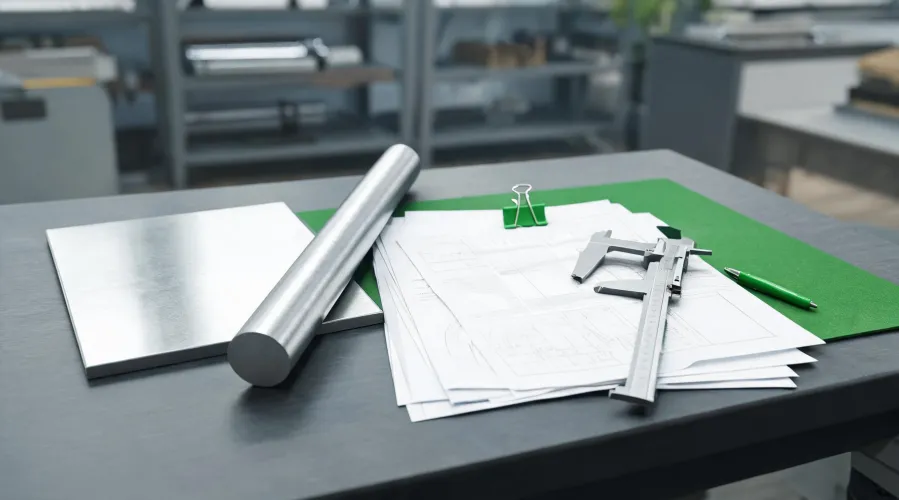
Picture a Tuesday morning in early March 2026. A procurement lead at a civil construction firm opens a 110-page request for proposals from a state department of transportation. The package is for a highway widening job with an unusual condition: the winning bidder must document the carbon footprint of every rebar ton and prove it can deliver 32,000 tons on a six-week schedule without a single trainload delay. The firm has built bridges for twenty years; the engineering is the easy part. What keeps the procurement lead awake is the supplier column. That column has exactly two realistic answers, and both are steelmakers with national reach. The decision will sit on the desk for the next month, and getting it wrong could turn a profitable project into a claims dispute. This article walks through how one buyer resolves that choice, using Commercial Metals Company as the lens, and why the melt-shop technology, logistics footprint, and scale data should change how any large buyer evaluates rebar suppliers.
A Highway RFP Puts Two Rebar Giants on the Short List
Inside that estimator's office, the first screen was a calendar problem. The letting calendar had already moved twice, the steel order had to be placed before the design was fully approved, and the penalty clause for late rebar delivery was written in dollars per day. That is the moment when a procurement lead stops comparing mill brochures and starts asking which supplier can absorb schedule shock. The easy answer is the one that has done this before, at the same scale, for the same kind of agency. But the easy answer is not always the safest answer, because production method determines how fast a mill can reconfigure its order book. A scrap-fed electric-arc furnace can adjust heats more flexibly than a blast furnace, and a supplier with its own fleet can reroute a partial load without waiting on a common carrier. None of those operational details appear in a price quote, yet they decide whether the project's critical path survives the first month. The rest of this evaluation is about putting those details into the supplier scoring sheet before the RFP deadline forces a choice.
When the estimator circulated the draft technical questions, one name answered with more than a price sheet. Commercial Metals Company's response pointed to early-stage construction services: engineering support, site preparation, ground-improvement options, and foundation-stage collaboration that happen before the first rebar truck is scheduled. CMC's own materials describe those services as reaching from AT&T Stadium in Dallas to the Pentagon and beyond, and for a public works director the portfolio matters because it signals that the supplier understands the whole construction sequence, not just the metallurgy. A vendor that can participate in site preparation and foundation work can catch a soil or drainage problem while there is still time to redesign, saving weeks that no delivery schedule can recover. The buyer's question therefore shifts: it is not whether CMC can make the tonnage, but whether a rebar supplier that embeds itself early in a project will protect the schedule more effectively than one that only appears when the steel order is placed. That distinction points the evaluation toward operating data—mill logs, fleet status, portal usage—rather than marketing adjectives.
Two Names Supply America's Rebar — CMC Is One of Them
Commercial Metals Company, headquartered in Irving, Texas, is one of only two primary suppliers of the steel reinforcing concrete in American buildings, bridges, roads, and infrastructure—the other is Nucor. That pairing is not a niche ranking; it defines the entire bidding landscape for a large buyer. When a state agency issues a multi-thousand-ton rebar package, only these two companies have the mill capacity, the scrap supply, and the distribution network to quote the whole job without breaking it into regional chunks. CMC also owns Tensar, a maker of foundation systems for roadways, public infrastructure, and industrial facilities, so the company acts on both sides of the concrete pour: the reinforcement above the foundation and the ground-improvement system beneath it. For a contractor prequalifying for a 2026 project, the existence of a two-supplier market changes negotiation strategy. Neither CMC nor Nucor can be treated as one more name on a crowded bid list; each knows it is indispensable at national scale. The practical consequence is that the buyer's leverage comes not from collecting five quotes but from understanding which supplier's production model will stay cost-competitive and compliant over the life of the contract.
CMC's public-facing materials list categories that read like a contractor's job folder: paving dowels and baskets, engineering services, restoration, corrosion-resistance solutions, ground-improvement systems, and construction services, supported by direct and indirect goods and a defined material-claim procedure. Behind the product list is a service architecture designed for the early phase of construction—planning, site preparation, foundations—as well as for the relationships that keep projects from stalling. In the same corporate materials, CMC describes its people and the value proposition in simple terms: strength, integrity, dependability, and partnerships that make customers return for the most challenging jobs. For a procurement team, that framing is less important than what it implies operationally: a supplier with engineering services and defined claim procedures is easier to audit when something goes wrong. The claim process, the engineering contacts, and the ground-improvement toolbox all reduce the chances that a foundation problem becomes a change-order battle. That service layer is exactly what separates a rebar vendor from an early-stage construction partner, and it belongs on the scoring sheet alongside price. Global locations such as Poland add a sourcing buffer that can smooth regional disruptions.
The Melt Shop Changes the Carbon Math
The carbon story separates CMC from the rest of the mill universe because it is built into the furnace, not bolted on afterward. Every CMC mill runs on electric energy and 100% recycled scrap, and in 2022 the company launched its Zero line, a carbon-neutral product aimed squarely at buyers with emissions targets. The company says this approach keeps more than 16 billion pounds of scrap out of landfills each year and consumes roughly 80% less energy than traditional steelmaking. On the CO2 side, the comparison is even more concrete: the industry average is 1.89 metric tons of CO2 per ton of steel, while CMC says its electric-arc-furnace technology can stay below 0.679 metric tons—roughly the 60% reduction stated in its own materials. For a buyer, that is not an abstract environmental claim. It is a scoring delta in any RFP that prices carbon, and it is durable because it comes from process design: scrap instead of virgin ore, electricity instead of coke-fired blast furnaces. A procurement team can ask CMC for the mill-level report behind that 0.679 figure and build the number into its bid model, which is more than most suppliers can offer.
The meaningful part for a contract that will run several years is what the carbon gap implies about future compliance. CMC's process average of 0.679 metric tons per ton sits far below the 1.89 industry norm, which gives the company headroom if regulators tighten the limit or if a state DOT raises the sustainability score in the middle of the program. A supplier operating at the old average would face a retrofit, an offset budget, or a penalty risk; CMC's EAF route already clears a higher bar. That is the kind of forecast and analysis a buyer can actually use: the supply chain that is closer to zero-carbon steel today is the one more likely to remain qualified tomorrow. When carbon reporting becomes part of the monthly scorecard, the difference between 0.679 and 1.89 also changes the owner's ESG disclosure, a factor large contractors increasingly pass down through the supply chain. None of this means the rebar is weaker—CMC's own materials describe its steel as the backbone of highways and structures—and the lower-carbon claim is tied to the manufacturing method, not to a weaker product grade. The estimator can treat the environmental data as an engineering parameter, as reliable as yield strength, when evaluating who will still be an approved supplier at the end of the decade.
Logistics, Services, and the Industry's Shift
The supplier landscape is not static, and one of the clearest signs of the direction is what the largest aluminum producer has done with its balance sheet. In July, Alcoa completed a 10-year, $1.1 billion contract with Pratt & Whitney for advanced aluminum alloy fan blade technology, and two weeks later spent $2.85 billion to acquire Firth Rixson, a U.K. maker of jet-engine components. Much of that engineering happens at Alcoa's Technical Center on a 40-acre campus, the world's largest light metals research and applied engineering facility—a reminder that the commodity producers leading this shift are building research teams, not just bigger furnaces. The thesis behind those moves is that metal companies win by moving up the value chain—into engineered parts, application technology, and long-term customer relationships—rather than by selling ungraded commodity tonnage. Alcoa's pivot carries a message for rebar buyers: the metal suppliers that will matter in the next decade are investing in the systems and products that help customers solve harder problems. CMC's comparable investments are in EAF technology, early-stage construction services, and logistics; Alcoa's investments are in aerospace alloys, but both point the same way. When a procurement team evaluates CMC, it should ask whether the company is making the same kind of strategic bets—not whether it can quote a low price this quarter.
CMC has already placed several of those bets inside rebar production. It operates what it says is the most automated T-post fabrication facility in the world, and it holds a series of firsts: the first in the industry to complete a three and five slit rolling process, the first in the world to run a highly energy-efficient micro mill, the first U.S. steel company to release an online customer portal, and the first to produce spooled rebar. It maintains its own trucking fleet dedicated to customer orders. Translating those firsts into procurement terms: spooled rebar means less manual handling and faster placement on site, the portal gives the contractor live visibility into order status, and the trucking fleet removes the single most common source of missed deliveries—a bottleneck at a third-party carrier. Together, they change the risk profile of a mega-project. A supplier whose own equipment can respond to a changed pour schedule is more valuable than one that can only promise a delivery week. These operational assets are the reason green claims and delivery reliability can point in the same direction: modern mill design produces both lower carbon and tighter logistics on the same balance sheet.
A Shortlist Rule That Survives the Next RFP Cycle
When the carbon data and the logistics layer sit side by side, the buying decision simplifies into a rule: put CMC on the shortlist and then audit its environmental data if the project is national in scale, has a sustainability scoring section, or runs a schedule with no slack. The threshold for that audit is explicit—verify that the mill-level CO2 number stays below 0.679 metric tons per ton against the industry average of 1.89, and check that the claimed 60% reduction is based on the melt-shop process rather than purchased offsets. If the numbers hold, CMC's production model converts a once-vague green premium into the lower-risk choice for a long contract: the same furnace design that cuts emissions also cuts energy cost and avoids the carbon liability of a blast-furnace asset. The rule is not sentimental. It says that when reliability and carbon are weighted in the RFP, a supplier that has already invested in both is a better bet than one that must retrofit to catch up. Because the U.S. rebar market has only two national suppliers, the comparison is between two known quantities, and the audit can be completed before the bid deadline.
Back in the estimator's office, the rule resolved the spreadsheet. Because the state letter included a carbon addendum and the schedule had no slack, the decision was not green premium versus price but which supplier had the operational proof to back the emissions number. CMC's early-stage construction representatives were already in the room from the pre-bid walkthrough, offering ground-improvement options and foundation engineering that went beyond the rebar quote. The references in their portfolio—AT&T Stadium, the Pentagon, and a chain of highways and bridges—matched the agency's own project type. The estimator did not need to believe in vague promises; the audit requested mill data, verified the fleet routes, and checked portal access for every order. On the day the bid went in, the company name in the supplier column was the one that had been there from the first screen. The same two names still dominated the market, but now the analysis justified the choice. That is the forecast that matters for a buyer: the supplier that has invested in both carbon technology and logistics is the safer partner for the next decade—not because of marketing, but because its production model answers the questions procurement teams will be asking for years.
The next RFP will arrive with the same three questions—scale, carbon, and delivery—and the answers will still be hiding in the melt shop and the trucking schedule, not in the price sheet. The estimator's decision was made before the deadline; the analysis just made it visible.

Jane Smith
I’m Jane Smith, a senior content writer with over 15 years of experience in the packaging and printing industry. I specialize in writing about the latest trends, technologies, and best practices in packaging design, sustainability, and printing techniques. My goal is to help businesses understand complex printing processes and design solutions that enhance both product packaging and brand visibility.