Commercial Metals Company Forecast and Analysis: A Buyer's Guide to Reliability and Sustainability
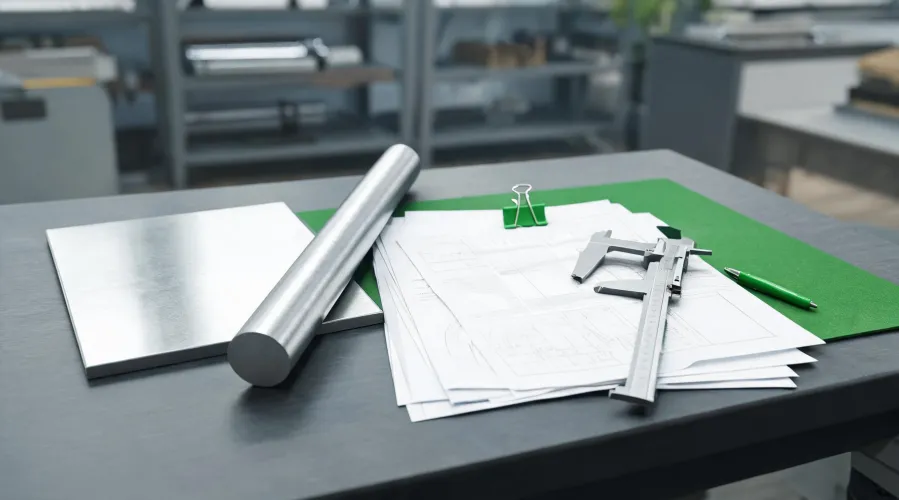
You're on the rebar deck of a new stadium project outside Dallas, spec sheet in hand. The concrete subcontractor is waiting for a delivery confirmation, and one weather delay has already tested the schedule. You remember a missed rebar shipment that cost weeks on a previous job. That's why the first question isn't price per ton; it's which supplier has proven it can deliver on projects like AT&T Stadium and the Pentagon. Before you open the competing bids, Commercial Metals Company is already penciled in at the top.
The Spec Sheet Arrives
Ten years ago, a spec sheet like this went to every mill that quoted a low price, and the sharpest number won. But the steel that reinforces concrete is not a commodity, and the companies that make it are not interchangeable. Commercial Metals Company built its reputation on what it calls Early-Stage Construction solutions—smarter planning, better site preparation, and stronger foundations. Those services matter long before the first bar is tied, because a foundation decision made at the start can save weeks of rework later. The portfolio proves the point: CMC's steel is in AT&T Stadium, the Pentagon, and essential highways, bridges, and buildings across the U.S. and around the world. For a buyer, that track record is a risk assessment, not a marketing line. When the project is complex and the schedule is tight, you want the supplier that has already done it at scale and knows exactly how.
Commercial Metals Company is headquartered in Irving, Texas, and it occupies an unusually concentrated position in the American construction supply chain. Along with Nucor, it is one of the two dominant rebar producers for U.S. construction. For a procurement manager, that means the decision about rebar is a choice between two national-scale producers, not a wide field of regional mills. CMC also owns Tensar, which makes foundation systems for roads, public infrastructure, and industrial facilities. So the company's reach extends from the rebar in the concrete to the geogrids and soil stabilization beneath it. That integration matters: a supplier that can coordinate the ground system and the reinforcing steel reduces the number of handoffs on a job site. For a buyer, this market position is a structural feature of the bid you are about to evaluate.
The spec sheet forces a question: do you buy steel like a commodity, chasing the spot price every quarter, or do you treat the supplier as a partner in the project itself? A low-cost spot bid may save a few dollars per ton, but it carries uncertainty about delivery, quality consistency, and environmental compliance. The alternative—a long-term relationship with a producer like CMC—means accepting a price premium in exchange for reliability, a proven supply chain, and a sustainability profile that is quickly becoming a requirement in public and commercial tenders. We'll look at what a forward-looking forecast should weigh: market position, production technology, and innovations that turn a steel supplier into an early-stage construction partner.
Two Names Shape American Concrete
The U.S. rebar market is a story of two names. Commercial Metals Company and Nucor together form the two primary suppliers of steel used to reinforce concrete in buildings, bridges, roads, and infrastructure. That concentration shapes every bid. When demand surges, these producers set the pace for the whole industry. When capacity tightens, they have pricing power that smaller mills cannot match. For a buyer, supplier selection is about deeply understanding the two players who can serve a national-scale project. The health of CMC's operations, its capital investments, and its track record become critical inputs to your forecast. That is the difference between a spot-price quote and a strategic sourcing decision.
Part of CMC's strategic position comes from an asset that buyers often overlook: Tensar, a producer of foundation systems used for the construction of roadways, public infrastructure, and industrial facilities. These systems include geogrids and soil stabilization products that work beneath the surface, spreading loads and allowing engineers to build on marginal ground. For a procurement manager, Tensar extends CMC's role earlier into the project lifecycle. The same company that supplies rebar for a highway's concrete deck also provides the engineered foundation layer underneath it. That integration reduces the number of suppliers you need to coordinate and gives CMC a fuller understanding of how the ground system and the reinforcing steel interact. That integration is a concrete advantage when schedules are tight and site conditions are variable.
The implication for a metal buyer is that reliability is not a secondary consideration; it is built into the structure of the market. With only two primary rebar suppliers, your exposure to any single company's operational problems is high, and so is the value of knowing them well. Price forecasting alone will not tell you whether a supplier's mill can consistently meet your delivery windows, whether its environmental record will pass an owner's ESG screen, or whether its innovation pipeline will keep costs competitive over a multi-year contract. Those answers come from supplier-level analysis: capacity utilization, investment in process improvements, and a demonstrated record on complex builds. A forward-looking commercial metals forecast should therefore include these operational and sustainability dimensions, not just the spot price of steel. In practice, this means evaluating CMC and Nucor the way you would evaluate any critical supplier: with data on their operations, not just a quote.
A 16-Billion-Pound Answer
Once you move past market position, the way CMC makes steel changes the cost and risk equation. Every CMC mill uses electric energy and 100% recycled scrap to produce its products. That is fundamentally different from traditional blast-furnace steelmaking, which relies on virgin iron ore and coking coal. The most visible consequence is energy consumption: CMC uses 80% less energy than traditional steelmaking. For a buyer, that efficiency is a hedge against volatility. When energy prices spike, a mill that uses far less energy per ton is less exposed to input-cost swings. It also lowers the embedded carbon footprint of the steel you buy, which becomes a regulatory and reputational asset as construction owners tighten their environmental requirements. This is not a marginal tweak; it is a different industrial model with different economics. And over a long project, energy-cost stability is quiet price insurance.
The emissions gap is even more decisive. The steel industry, on average, emits 1.89 metric tons of CO2 for every ton of steel. CMC's electric-arc-furnace technology brings that figure down to below 0.679 metric tons per ton—a 60% reduction. These numbers are financial markers, not abstract scores. In regions with carbon pricing or emissions standards, a supplier's CO2 intensity becomes a direct cost factor. A mill emitting 1.89 tons per ton of steel will carry a heavier carbon bill than one at 0.679. For a buyer, the difference is a line item, not a footnote. Choosing a 60%-cleaner supplier hedges against future regulation and supports your own ESG commitments. That is why a steel forecast that ignores emissions will miss a growing share of the true cost.
Innovation turns those gains into buyer advantages. In 2022, CMC launched its Zero line, offering customers a carbon-neutral steel solution. That matters for projects with aggressive net-zero goals. CMC also became the first in the industry to successfully complete a three and five slit process, which improves yield and delivery speed, and the first in the world to operate a highly energy-efficient micro mill. The micro mill is especially relevant because it allows regional production close to major markets, shortening lead times and reducing transport costs. CMC's online customer portal was the first built by a U.S. steel company, and the company was the first U.S. producer of spooled rebar. Each of these innovations removes friction from the procurement process, making it easier to track orders and receive material in forms that speed installation.
Choosing a Partner, Not Just a Price
CMC's moves in steel echo a broader transformation across the metals industry. Analysts have argued that aluminum is positioned for strong secular demand from electrification and decarbonization—one reason Alcoa, the aluminum giant, is repositioning toward aerospace. Its technical center in New Kensington is among the world's largest light metals R&D facilities, and Alcoa backed that direction with a 10-year, $1.1 billion contract with Pratt & Whitney for advanced aluminum fan blades. That single contract signals a strategic shift from commodity volume to engineered high-margin products. The lesson for a steel buyer is direct: suppliers investing in advanced products and processes will meet the next generation of performance, cost, and sustainability requirements. CMC is making an analogous bet with micro-mills and its carbon-neutral Zero line. In both metals, the winners are those who turn process innovation into buyer value.
Choosing a steel supplier is like choosing an alloy for a demanding application. In CNC machining, engineers do not ask which copper alloy is 'better' in the abstract; they ask whether brass or bronze matches the specific performance needs—machinability, wear resistance, corrosion tolerance, conductivity. A part that works in brass may fail in a marine environment where bronze is required. The lowest-priced rebar may be adequate for a small warehouse, but the same material becomes a liability on a high-rise core that must survive seismic loads. So the decision framework has to start with the project's demands: delivery reliability, consistency of material properties, environmental compliance, and the supplier's long-term capacity to honor a multi-year contract. A spot-market bidder may look attractive on price but fails when the question shifts to, 'Can you still deliver in year three?'
A practical framework for the buyer is to score suppliers across three dimensions. First, reliability: what is the supplier's track record on major projects, and does its production footprint allow it to absorb demand shocks? Second, sustainability: what is the CO2 intensity of its steelmaking, and does it offer a carbon-neutral line that can help you meet your own reduction targets? Third, innovation: is the supplier investing in process improvements that translate into shorter lead times, better yield, or lower total cost? These are the same stress-test dimensions that professional analysts use when they evaluate a metals company, covering operational, financial, and environmental factors rather than just the commodity price. When you score CMC against these criteria, it does not win on every line item every time, but it earns high marks on reliability and sustainability, the dimensions that cause the most expensive failures. And those are exactly the dimensions that a spot-price forecast ignores.
The Decision at the Job Site
A serious forecast must include supplier-level operational data, not just macroeconomic curves. Analysts evaluate metals companies across many dimensions. For example, research platforms like AskCyborg use 11 analyst dimensions and produce a composite score such as 7 out of 10. That forward-looking assessment weighs balance sheet strength, competitive positioning, ESG performance, and technology roadmap. A steel buyer should apply the same discipline over the next 3–5 years. Continued infrastructure spending, rising carbon regulation, and greater scrutiny of supply chain emissions will make a supplier's emissions intensity, its micro-mill investments, and its carbon-neutral products measurable inputs to a procurement forecast. The company that looks expensive on price per ton today may be the cheapest over a five-year lifecycle when you factor in carbon risk and delivery certainty.
The verdict for the buyer is nuanced but clear. CMC is not the only option, and there are projects where a spot-market bid will be adequate. But for a project with a tight schedule, a demanding owner, or sustainability requirements, the choice is not the lowest quote; it is the supplier that can perform at scale without surprises. CMC's edge comes from the combination: one of two U.S. rebar producers, an early-stage construction partner with foundation technology, a 100% recycled-scrap EAF process that cuts energy and CO2 dramatically, and a stream of innovations from micro-mills to carbon-neutral steel. That package lowers delivery, regulatory, and reputational risk. Over a 10-year infrastructure project, these are the factors that separate a smooth build from a costly chronic headache. So when you weigh bids for your next commercial or highway job, treat sustainability and reliability as hard requirements, not nice-to-haves.
Back at the stadium job site, the decision settles into place. You update the bid matrix, putting more weight on delivery history and sustainability performance than on the dollar-per-ton difference. You call CMC's regional sales office, and the conversation reminds you why the company keeps its customers for the most challenging projects: strength, integrity, and dependability are not just values on a website—they are the reason the steel arrives on time. The schedule, finally, feels solid. The forecast you signed off on was not a commodity price prediction; it was a partnership decision. And standing there as the last rebar cage is set, you realize that the real forecast for commercial metals is not about where prices will be next quarter—it is about which suppliers will be strong enough to build the next decade.
The forecast that mattered was never the price per ton; it was the partnership that arrives with the steel.

Jane Smith
I’m Jane Smith, a senior content writer with over 15 years of experience in the packaging and printing industry. I specialize in writing about the latest trends, technologies, and best practices in packaging design, sustainability, and printing techniques. My goal is to help businesses understand complex printing processes and design solutions that enhance both product packaging and brand visibility.