Inside ICOP: How Metal Producers Drive the Copper and Metals Mining ETF
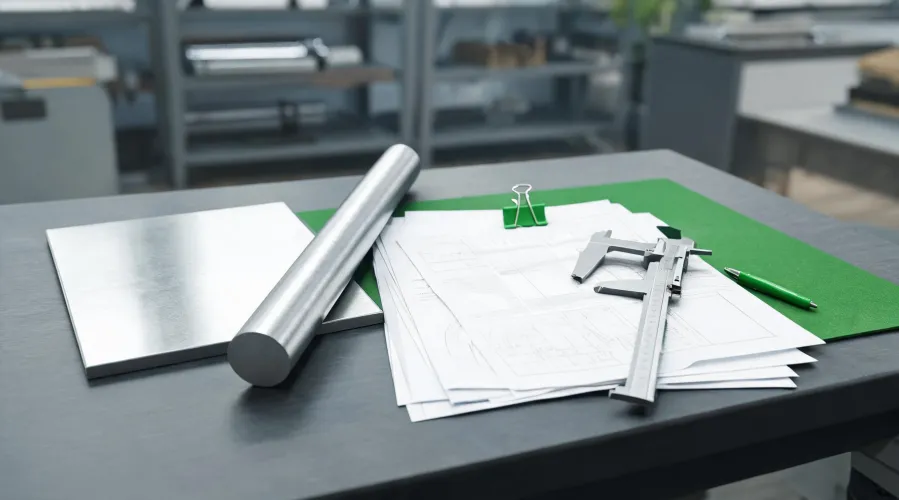
ICOP is often described as a way to bet on copper, but that description misses what the fund actually owns. The iShares Copper and Metals Mining ETF holds shares of companies that mine, refine, and fabricate metals, and the financial performance of those businesses—not the spot price of copper alone—determines how the fund behaves over time. Consider Commercial Metals Company. CMC is one of two primary U.S. suppliers of steel rebar used to reinforce concrete in buildings, bridges, and highways, and it makes that steel with electric arc furnaces charged with 100% recycled scrap. The result is a producer that emits roughly 60% less CO2 per ton of steel than the industry average, a cost and regulatory advantage an efficient index captures. The direct answer to evaluating ICOP is to look past the price chart and into the operations of the metal producers themselves: their efficiency, their sustainability, and the mix of metals they bring to market.
The ICOP ETF at a glance
At first glance, a metals mining ETF looks like a simple commodity play: buy the fund, and your returns rise and fall with the price of copper. The reality is more layered, because an ETF is a collection of operating companies, each with its own cost structure, product lines, and exposure to different end markets. Commercial Metals Company illustrates the point. Headquartered in Irving, Texas, CMC produces rebar and related construction materials, and along with Nucor it is one of two primary U.S. suppliers of the reinforcing steel used in buildings, bridges, roads, and infrastructure. That position ties the company's fortunes to the physical pace of construction and public works spending, not merely to a commodity quote. For an ICOP investor, this is the first clue that the fund's value is anchored in industrial activity and that operational strength deserves as much attention as any price forecast.
If the fund's value depends on operational strength, the natural question is whether buying ICOP on copper-price forecasts alone means reading the wrong signal. A rally in copper can lift the whole sector briefly, but it does not automatically translate into lasting gains for inefficient producers, who face rising energy costs, aging equipment, and thinner margins when prices normalize. The companies that compound value over time are those that can produce metal profitably at the bottom of the cycle, not just at the top. That distinction matters because an ETF is not a futures contract; it is a collection of businesses whose earnings, balance sheets, and reinvestment decisions drive the fund's total return. Before adding ICOP to a portfolio, an investor should ask what kind of producer each holding is: a high-cost marginal miner that only thrives in a boom, or a low-cost operator that can fund dividends and growth through a downturn.
CMC's profile goes beyond rebar, and that breadth reinforces why a metals ETF should be evaluated company by company. The firm also owns Tensar, a producer of foundation systems for roadways, public infrastructure, and industrial facilities, so its revenue touches multiple stages of a construction project, from ground preparation to the finished structure. For an ICOP holder, this means the fund's steel exposure is partly a bet on the construction cycle itself, including highway programs, bridge repairs, and industrial plant development. When governments commit to rebuilding aging infrastructure, companies like CMC see demand spread across product lines rather than concentrated in a single commodity. Each metal producer in the fund brings a distinct set of customers, contracts, and competitive pressures, and the ETF's long-term trajectory is the sum of those operating stories. That is why a price chart alone cannot capture the fund's potential; operational strength is what ultimately shapes returns.
How sustainable steel is reshaping the metal supply chain
Sustainability has become a competitive lever in the steel industry, and CMC's numbers show why the shift is more than a public-relations exercise. The industry average for carbon emissions is 1.89 metric tons of CO2 per ton of steel, while CMC's electric arc furnace technology allows it to average below 0.679 metric tons per ton—a reduction of roughly 60%. The mechanism is straightforward: instead of smelting virgin iron ore with coke in a traditional blast furnace, EAF steelmaking melts recycled scrap using electric energy, cutting both emissions and the need for raw material inputs. That efficiency directly affects the cost side of the business, because energy is one of the largest variable expenses in steel production. An investor who sees sustainability purely as an ESG checkbox is missing the point; a lower-carbon process is a lower-cost process, and that is exactly the kind of structural advantage an ETF holds over a full market cycle.
But does a lower carbon footprint actually move the numbers that matter to an ETF investor? The connection runs through costs, regulation, and customer demand. Energy-intensive producers are exposed to volatile electricity and fuel prices, so the less energy a company needs per ton, the more predictable its margins. Regulatory risk also favors the cleaner operator: as emissions rules tighten, high-carbon steelmakers may face carbon taxes or lose access to public procurement contracts, while producers with a small footprint are insulated. On the demand side, large construction buyers increasingly prefer materials with verified environmental profiles, giving a sustainable producer a commercial edge unrelated to the copper price. For an investor, the question is whether these operating advantages compound into higher returns and steadier cash flows—that is the lens through which sustainability should be evaluated in a metals fund.
Looking deeper into CMC's production model reveals how far the operational advantage extends. Every CMC mill runs on electric energy and 100% recycled scrap, keeping over 16 billion pounds of scrap metal out of landfills while using 80% less energy than traditional steelmaking. The company also introduced its Zero line in 2022, a carbon-neutral steel solution for customers who need verified low-emission materials, and it was the first in the industry to operate a highly energy-efficient micro mill. Each milestone changes the company's risk profile, because recycled scrap reduces dependence on iron ore price swings and energy efficiency cushions against power price spikes. For an ICOP investor, these sustainability metrics are leading indicators of cost competitiveness: a producer that uses less energy and less virgin ore is structurally better positioned to protect margins when metal prices fall, softening the fund's downside during cyclical downturns.
Copper alloys: why brass and bronze matter
Copper demand is not a single undifferentiated curve, and the distinction between brass and bronze shows why the metal's end markets are more diverse than most investors assume. Both are copper alloys, but they behave very differently on the machine and in service. Brass is the workhorse for high-volume, precision parts with thin walls or fine cosmetic finishes, because it cuts easily, cycles quickly, and wears tools slowly. Bronze, by contrast, earns its place in bearings, bushings, and load-bearing or corrosion-prone components, where superior wear resistance and durability matter more than machinability. Every time a manufacturer chooses one alloy over the other, copper is consumed for a specific function: electrical fittings, marine hardware, valve bodies, or structural sliding parts. For a metals mining ETF, that functional diversity means copper exposure is spread across manufacturing, transport, construction, and energy equipment, not concentrated in a single application like wiring.
What does alloy selection have to do with the performance of a fund like ICOP? The answer lies in how copper demand is distributed across the economy. If copper were used mainly in one industry, a downturn in that industry would hit the metal hard, and the ETF would suffer accordingly. But because engineers and procurement teams choose copper alloys for thousands of distinct components under different performance requirements, demand is inherently more diversified. A recession in homebuilding might slow demand for brass plumbing fittings, while investment in industrial machinery increases orders for bronze bearings. That diversification acts as a stabilizer, making the fund's copper exposure less fragile than a single price forecast would suggest. The follow-up question is whether the same logic holds across different metals in the same fund.
Material selection also reveals why copper consumption is resilient enough to support a dedicated mining ETF. Pure copper, designated C11000, is prized for electrical and thermal conductivity, achieving about 101% of the international annealed copper standard, making it the default for connectors and heat exchangers. Brass, typically C36000, is specified for high-speed CNC machining because it produces clean parts quickly and at low cost, so it dominates precision fittings and fasteners. Bronze, such as C93200, is chosen for anti-friction and wear-resistant applications, the material engineers turn to for heavy-duty bearings. When the wrong alloy is used, the consequences are visible: electrical connectors overheat from poor conductivity, or marine fittings seize from saltwater corrosion, leading to failed parts and expensive rework. Those distinctions matter because copper alloys serve non-negotiable functions in modern equipment, embedding demand for the metal in the daily decisions of design engineers across countless industries.
Aluminum and the diversified metals landscape
Steel and copper tell only part of the story; aluminum adds a third layer. Alcoa Corporation is one of the largest aluminum producers in the world, operating as a vertically integrated company whose activities reach from bauxite mining through alumina refining to primary aluminum production. That vertical structure gives the company control over costs at each stage of the value chain, rather than relying on a single input or market. In a 2026 analyst assessment, Alcoa received a score of 7 out of 10 across 11 stress-tested dimensions, with a thesis emphasizing strong upstream aluminum exposure, leading ESG credentials, and next-generation technology positioning. ICOP investors see Alcoa as a different kind of cyclicality: aluminum demand is tied to lightweight vehicles, aircraft, packaging, and power infrastructure, which do not always move in step with steel or copper. Holding both in one fund blends several industrial cycles into a single, more balanced exposure.
How should an investor weigh steel, copper, and aluminum when they sit inside the same ETF? The honest answer is that each metal follows its own demand cycle, and the fund's overall risk is a blend of those cycles. Steel demand is driven by construction and heavy equipment; copper demand by electrification and electronics; aluminum demand by lightweighting, packaging, and power transmission. When one segment slows, another may accelerate, giving a diversified metals fund a smoother profile than a single-commodity investment. The analytical task is not to predict all three cycles correctly, but to judge whether the companies can generate cash and protect margins in their respective segments. If CMC has a cost advantage in steel and Alcoa has scale in aluminum, the fund benefits from operational strength even when macro forecasts are uncertain.
The breadth of the metals industry becomes concrete when you look at where these companies' products end up. CMC's early-stage construction solutions have supported projects from AT&T Stadium in Dallas to the Pentagon, along with highways, bridges, and buildings around the world, and its product range includes paving dowels, corrosion resistance solutions, and ground improvement systems. Those applications show that a metals company is not just a commodity seller; it is a supplier of engineered materials for specific infrastructure challenges. For an investor evaluating any metals fund, the lesson is to look for this kind of diversity inside the holdings: fabricators with specialized product lines, integrated producers with control over raw materials, and recyclers with structural cost advantages. Companies that combine these traits are the most likely to deliver durable returns, and they are the reason a metals mining ETF should be judged by the quality of the businesses it owns, not by the direction of any single metal price.
None of this means copper forecasts are irrelevant; they matter, but they are only one signal among many. The verdict on ICOP is that it is fundamentally a fund of operating businesses—steelmakers with recycled-scrap economics, copper-alloy producers serving thousands of industrial applications, and aluminum giants with integrated supply chains—and its long-term performance will be determined by how efficiently those businesses run. The thesis that began this article holds at the end: investing in ICOP means investing in the global metals industry, and the way to decode the fund is to study the producers themselves, the sustainability of their methods, and the mix of metals they bring to market. For an investor who asks those questions, ICOP is not a guessing game about prices but a calculated position in the industrial economy's most essential materials.

Jane Smith
I’m Jane Smith, a senior content writer with over 15 years of experience in the packaging and printing industry. I specialize in writing about the latest trends, technologies, and best practices in packaging design, sustainability, and printing techniques. My goal is to help businesses understand complex printing processes and design solutions that enhance both product packaging and brand visibility.