Round Perforated Metal: Choosing the Right Alloy for Coastal Air
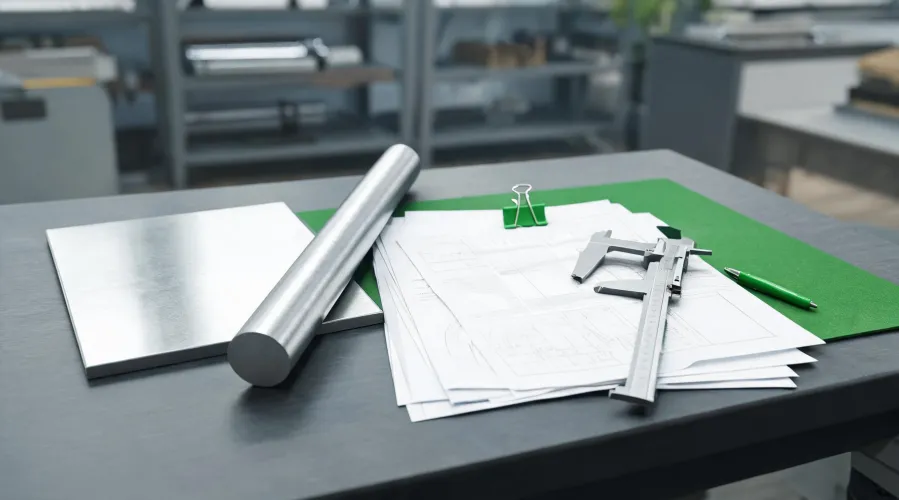
Spec sheet arrived on a Tuesday, pinned to the work order for a ventilated guard on a seafood processing line. The plant sat a quarter mile from the harbor, air carrying enough salt to film every railing. The line read: perforated metal, round, 0.125 nominal, 48 by 96 inches. The maintenance engineer had quoted hundreds of guards, but that word 'round' tripped people up. In the metal supply world, 'round' can mean a circular sheet—a disc for a pipe flange or dial face. More often it means round perforations: holes letting air through while keeping debris and fingers out. Two very different products share one word. Ordering the wrong one meant a week of downtime and a restocking fee. So before calling the supplier, she typed the full phrase into the search box: 'mcnichols perforated metal round.' The results showed a catalog of possibilities, and the real decision, it turned out, had nothing to do with the sheet shape. It was about the material, and whether it would survive salt air blowing off the water.
The Round Order That Nearly Went Wrong
Spec sheet arrived on a Tuesday, pinned to the work order for a ventilated guard on a seafood processing line. The plant sat a quarter mile from the harbor, air carrying enough salt to film every railing. The line read: perforated metal, round, 0.125 nominal, 48 by 96 inches. The maintenance engineer had quoted hundreds of guards, but that word 'round' tripped people up. In the metal supply world, 'round' can mean a circular sheet—a disc for a pipe flange or dial face. More often it means round perforations: holes letting air through while keeping debris and fingers out. Two very different products share one word. Ordering the wrong one meant a week of downtime and a restocking fee. So before calling the supplier, she typed the full phrase into the search box: 'mcnichols perforated metal round.' The results showed a catalog of possibilities, and the real decision, it turned out, had nothing to do with the sheet shape. It was about the material, and whether it would survive salt air blowing off the water.
The question that surfaced immediately was not which sheet size she needed, but which alloy would still look like metal a year later. The guard would sit outdoors, under a roofline, exposed to drifting spray and condensation. A carbon steel panel would rust within weeks. Stainless steel was the obvious default, but stainless comes in grades, and the price difference between grades is not trivial. Aluminum was the lighter, cheaper option, but not every aluminum alloy behaves the same in a coastal atmosphere. The engineer needed to know whether the catalog's 'round perforated metal' listings could tell her more than the hole arrangement—whether they could point her to the right material without a separate metallurgy course. The answer, buried in the technical specs, was that the alloy designation changed everything. This is the story of how one coastal order, for a part that seemed simple, became a lesson in matching metal to environment. It starts with the aluminum side of the catalog, because that is where most buyers look first, and where the subtle differences hide.
Why 5052 Entered the Conversation
Aluminum sheet metal is not one material. The alloy number is shorthand for a whole set of mechanical and chemical properties, and the difference between grades can be the difference between a panel that lasts decades and one that pits in a season. Three designations show up over and over in the perforated metal catalog: 3003, 5052, and 6061. 3003 is the general-purpose alloy, sturdy enough for panels, signs, and ductwork, and easy to form and weld. It offers reasonable corrosion resistance but no special protection against salt. 5052 steps up from there. Its magnesium content gives it higher strength than 3003, and its corrosion resistance is markedly better, which is why the industry lists it as the standard for marine environments and fuel tanks. 6061, meanwhile, is a structural alloy, stronger still and forgiving to machine, but it is not automatically the best choice for a corrosive atmosphere. The practical takeaway for a coastal buyer: if the budget allows aluminum, 5052 is the grade that stands a real chance against the salt air, and it is the one the spec should name when the word 'marine' appears anywhere near the installation.
The case for 5052 goes beyond reputation. Aluminum as a family is about one third the density of steel, which means the same guard weighs roughly a third of what it would in stainless, and weight matters when a panel has to be lifted into place on a ladder. More important for this order, aluminum's natural oxide film gives it good corrosion resistance in common atmospheric and marine atmospheres. That resistance is not uniform across grades, though. The technical manual from the coil supplier notes that an anodized finish can enhance corrosion resistance and scratch resistance further, but the base alloy has to be chosen correctly first. 5052 is the alloy the industry singles out for salt exposure: it is the one listed for saltwater service, and it handles the intermittent chloride contact typical of a processing plant near the coast. In that setting, a 5052 panel will often outperform 304 stainless, because 304's protection is built for atmospheric conditions and low-level chemical exposure, not for the constant assault of salt spray. The magnesium in 5052 keeps the oxide layer stable, so the metal does not develop the deep pitting that eventually sends a stainless guard to the scrap pile.
For a round-perforated order, the alloy choice drives the whole spec sheet. The supplier's aluminum sheet guide draws a clear line between thin-gauge sheet, typically 0.2 to 6.0 millimeters thick, and thicker plate; perforated panels almost always fall into the sheet range. Once the buyer selects 5052, the gauge and the hole size become the next variables, but the material decision determines whether those dimensions will hold up under the environment. A 5052 sheet at 0.125 inch resists denting better than a 3003 sheet of the same thickness, and the extra strength means the open area can stay large without the panel flexing. That matters for a ventilated guard, because the whole point is airflow. If the engineer had let the catalog default to 3003, the panel might have corroded quietly at the cut edges—the punched holes expose fresh alloy, and without the protective oxide layer regenerating properly, those edges become the weak points. Naming 5052 on the drawing closes that gap, and it also gives the fabricator a clear target for bending and punching, so the order moves through quoting without ambiguity.
When the Salt Air Changes the Equation
The importance of that material choice becomes concrete in a case from a chemical processing facility in Shandong Province, reported in 2024. The facility had installed 304 stainless steel cooling headers for a seawater heat exchange system. On paper, 304 is food-grade, widely used, and a safe default for process piping. The procurement team chose it because it was cheaper, saving roughly 12,000 on material costs compared to the marine-grade alternative. Within a short operating window, the pipe walls suffered complete chloride corrosion. The seawater, with its constant chloride load, attacked the 304 at a rate the alloy was never designed to handle. The headers failed, the system went down, and the 12,000 in first-cost savings disappeared into a replacement job that cost several times that figure. For a buyer looking at round perforated panels, the lesson is not about pipes—it is about the mechanism: when chloride exposure is continuous, 304 stainless gives way, and the corrosion is not cosmetic. It is structural. The metal loses thickness, the holes grow ragged, and the guard that was supposed to protect equipment becomes a source of contamination.
The reason 316 stainless stands apart is written in its chemistry. 316 adds 2 to 3 percent molybdenum, an element that stabilizes the oxide film and prevents chloride ions from breaking it down. That is why the specification guides describe 304 as suitable for atmospheric conditions and low-level chemical exposure, while 316 is the necessary protection for marine environments, saltwater, and high-chloride industrial use. The numbers make the difference practical: 316 costs 30 to 40 percent more than 304, and that premium buys a specific capability, not a generic 'better' grade. A coastal plant's ventilated guard, sitting outdoors and hit with salt spray every high tide, is much closer to the marine case than to a kitchen countertop. The 304 panels might look identical for a month, but microcrevices around every punched hole become initiation points for pitting. Once chlorides penetrate, the corrosion proceeds under the surface, hidden until a white crust appears and the panel starts flaking. The Shandong failure shows the endpoint of that process: complete chloride corrosion in a system where the metal was chosen on first cost alone. The same logic applies to a perforated sheet, only faster, because the punching exposes fresh grain structure at every hole.
Cost is where the decision gets uncomfortable. 316 stainless with its premium can double the material line on a quote. For a small order of guards, that spread is real money. But the Shandong case puts the premium in perspective: the team that saved 12,000 by choosing 304 spent far more replacing corroded pipe, not counting the downtime. The 30 to 40 percent gap is a one-time cost; corrosion is a recurring one, and in a chloride-rich environment it is not a question of if, but when. A buyer weighing first cost against lifecycle cost has to ask how long the guard is expected to serve. If the plant plans to run for a decade, the stainless premium amortizes into pennies per month, while a failed panel means a reorder, a reinstall, and a production interruption. For the coastal order, the cost comparison is not really between 5052 and 316; it is between a material that survives the environment and a material that gets replaced. The numbers on the quote are only the first page of that story.
What the Drawing Actually Needs
Before the buyer can write the spec, the terminology has to be nailed down. In perforated metal, 'round' almost always refers to the perforations, not the sheet outline. A round-hole sheet has a pattern of circular apertures punched through it, usually in a staggered or straight grid. The sheet itself is a rectangle cut to the ordered length and width. The supplier's own aluminum sheet guide confirms that the flat material used for such panels is 'aluminum sheet' — thin-gauge flat aluminum, typically 0.2 to 6.0 millimeters thick, with light weight, good formability, and easy processing. That definition matters because it tells the buyer that a round-hole panel is a sheet, not a plate, and that the thickness spec will fall in that range. A circular sheet, by contrast, would be called a 'blank' or 'disc,' a minor product category. So when a drawing says 'perforated metal, round,' the correct reading is round holes. This distinction changes the entire specification: the hole size, center-to-center spacing, and open area percentage are all defined by the perforation pattern, not by the sheet geometry. An engineer who mistakenly orders a round sheet receives a disc with no holes at all, and the error surfaces only when the fabricator asks what the disc is for.
The same discipline that a knife buyer uses to check steel and heat treatment applies to a perforated metal order. Before sending the RFQ, a buyer should confirm five parameters: material grade, sheet thickness, hole size, open area, and pattern layout. Material grade determines corrosion behavior; for coastal duty that means 5052 aluminum or 316 stainless, with 304 only in mild conditions. Thickness controls stiffness and sheet weight; most guards use 0.125 inch, but a heavier panel may need 0.1875 for wind load. Hole size and open area together govern airflow and shielding; a typical round pattern is 0.25-inch holes on 0.375-inch centers, which yields around 40 percent open area. Pattern layout—staggered versus straight—affects strength and appearance. The catalog lists these parameters in every pattern table, but they are only meaningful if the buyer states them explicitly. The same diligence that checks whether a steel is genuine pattern-welded or powder-metal demands that the order specify the alloy with a four-digit number, not a vague 'aluminum' or 'stainless.' That single habit eliminates most misorders.
When the buyer opens the Mcnichols catalog with these five parameters in hand, the selection process becomes a matching exercise rather than a guess. The technical manual for custom-rolled aluminum coil shows how the supplier's line maps alloy, gauge, and finish to standard products. For a round-hole guard in 5052, the catalog will have a pattern that lists hole diameter, percent open area, and sheet size options. The engineer can narrow the search by filtering material to 5052, thickness to 0.125, and hole size to the fraction that matches the airflow requirement. The remaining choices are already validated for that alloy, so the risk of a mis-spec drops dramatically. The catalog also notes that aluminum's light weight—about one third the density of steel—makes the shipping cost lower and the panel easier to handle, a benefit that shows up on the total landed cost even when the unit price is comparable. For a coastal plant, the catalog's own data point that 5052 carries marine-grade corrosion resistance is the cue to stop comparing every alloy and lock in the order with confidence.
The Decision Rule That Stuck
Back at the seafood plant, the engineer closed the catalog with the decision made. The guard would be 5052 aluminum, 0.125 inch thick, with a quarter-inch round hole pattern in a staggered layout. The choice surprised the vendor, who expected the default 304 stainless. But the engineer had run the numbers: the plant's salt exposure was intermittent—spray on windy days, condensation at night, but no constant immersion. That profile matched the aluminum alloy's strength exactly. The 5052 panel weighed less than half of what a stainless panel would have, so installation took one person instead of two. The fabricator confirmed the spec without a single clarifying call, and the quote came in below the budget line that had triggered the whole search. Six months later, the guard looked as good as the day it was installed, with no white powder, no rust bleed, and no loose perforation edges. That same guide had listed 5052 as the marine alloy, and the engineer's decision to trust that designation instead of reflexively ordering stainless had turned a routine purchase into a reference standard for future bids.
The rule that emerged from this order is simple enough to carry into any future material decision. If the installation will face constant chloride immersion—think direct saltwater splash, submerged service, or continuous brine mist—choose 316 stainless. That is the material with the molybdenum shield, and that premium is insurance you cannot skip. If the exposure is intermittent or simply atmospheric, 5052 aluminum is often the smarter buy: it resists the salt, costs less, and weighs less, so it saves on both material and installation. That leaves 304 stainless as a middle option, acceptable only when the environment is mild and first cost is the dominant constraint. The rule turns the catalog's alloy table into a decision tree, and it prevents the most expensive mistake in coastal metal buying—paying for 316 when 5052 would serve, or buying 304 to save a little and watching it corrode. Next time a drawing says 'perforated metal, round,' the conversation starts with the environment, not the hole shape.
Here’s the rule that order taught: choose 316 stainless when chloride contact is constant, choose 5052 aluminum when salt exposure is intermittent or atmospheric, and choose 304 only when the environment is mild and first cost rules. Let the exposure decide the alloy, not the hole shape.

Jane Smith
I’m Jane Smith, a senior content writer with over 15 years of experience in the packaging and printing industry. I specialize in writing about the latest trends, technologies, and best practices in packaging design, sustainability, and printing techniques. My goal is to help businesses understand complex printing processes and design solutions that enhance both product packaging and brand visibility.